Fuel scarcity pushed transport costs up by 14.3 percent in September, adding to pressures on households already struggling with the high cost of living, according to a newly-published study.
The latest Cost of Living Analysis study by the Employers Consultative Association of Malawi (Ecam) shows that average monthly transport expenditure increased to K160 000 in September from K140 000 in August, reflecting the impact of fuel shortages experienced towards the end of the month.
“Transport costs increased due to fuel scarcity experienced at the end of September, resulting in higher transportation costs,” reads the study in part.
The increase pushed up overall household living costs, with Ecam estimating that the monthly cost of living, including transport, rose to K1.15 million in September from K1.11 million in August.
“When transport is factored in, the total cost of living increased from K1.1 million in August 2026 to K1.14 million in September 2026,” further reads the report.
The findings of the study underscore the wider economic impact of recurring fuel shortages, which economists say often ripple through the economy by increasing transport and distribution costs, ultimately raising the prices of goods and services.
During the month under review, the cost of living for a household of six, including transport, increased by 3.18 percent to K1.149 million while the cost of basic needs excluding transport rose by 1.58 percent to K989 868.
Food prices increased by an average of 1.58 percent, with the cost of the food basket rising to K666 499 from K656 109 in August while non-food expenses increased by 1.57 percent to K323 369 from K318 369.
Meanwhile, headline inflation declined to 19.4 percent in September from 20 percent in August 2026 and 20.8 percent in July, while food inflation fell to 13.4 percent from 14.3 percent and non-food inflation decreased to 31.8 percent from 32.2 percent, according to figures from the Reserve Bank of Malawi.
In an interview yesterday, Consumers Association of Malawi executive director John Kapito said the fuel scarcity has fuelled black market trading, with motorists paying between K15 000 and K20 000 per litre and called on authorities to improve transparency and crack down on illegal fuel sales.
“Black market fuel is unsafe and its prices are exploitative,” he said, urging government to explore alternative fuel supply sources and provide regular updates on availability to ease consumer concerns.
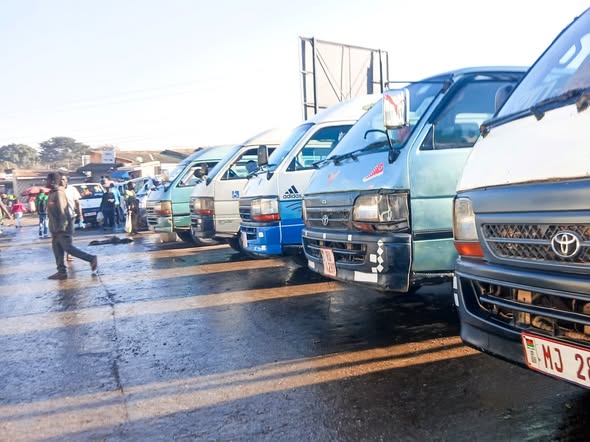
Minibus Owners Association of Malawi secretary general Coaxley Kamange said fuel is selling at K20 000 per litre on the black market, a situation that has forced operators to hike fares.
However, he said the association does not encourage its members to buy fuel on the black market.
Passenger Welfare Association of Malawi president Don Napuwa said some passengers are opting to walk because they cannot afford exorbitant fares.
“We can only ask government to solve the problem. Otherwise, gains they have made in terms of economic recovery will go several steps backward,” he said.
Centre for Social Concern programme officer for economic governance Agnes Nyirongo observed that although food inflation is stable, transport costs have been volatile because of foreign exchange scarcity, thereby stifling business growth.